
01 —
Context & Problem
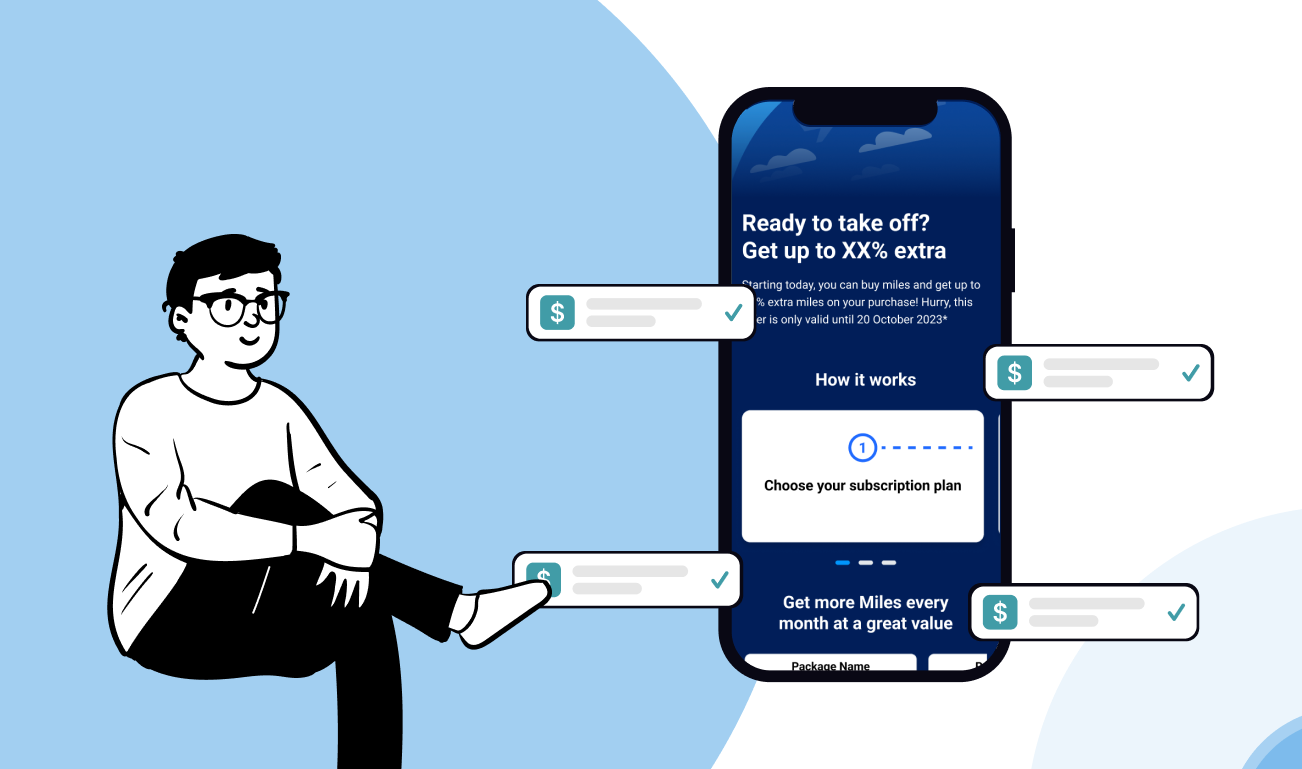
Points, later acquired by Plusgrade, had previously launched a subscription product that failed to gain traction. Despite the growth of subscription-based offerings in travel loyalty, the initial program struggled due to unclear value communication, confusing accrual mechanics, and poor usability. Competitors were quickly entering the market with more refined products, and Plusgrade risked losing its opportunity to lead.
The challenge was not limited to customer adoption—internal skepticism existed due to the product’s poor track record. Leadership needed evidence that the product could succeed if redesigned. To move forward, the team had to answer two questions: Why did the original subscription fail, and how could Plusgrade deliver a viable, scalable product?
02 —
Approach
Clear objectives were set to regain competitive parity and validate subscriptions as a strategic revenue stream. Targets included launching with four or more airlines or hotels in 2024, achieving specific revenue goals, improving conversion, resolving user confusion, adhering to WCAG 2.1, and introducing a “Perks” mechanic to differentiate the product.
The approach prioritized structured research. Stakeholder groups gathered market data and partner feedback, while usability testing revealed critical flaws in the original product. A design sprint united stakeholders across the company, aligning on goals and generating a shared roadmap. This alignment helped secure organizational buy-in for the relaunch.

03 –
Design & execution
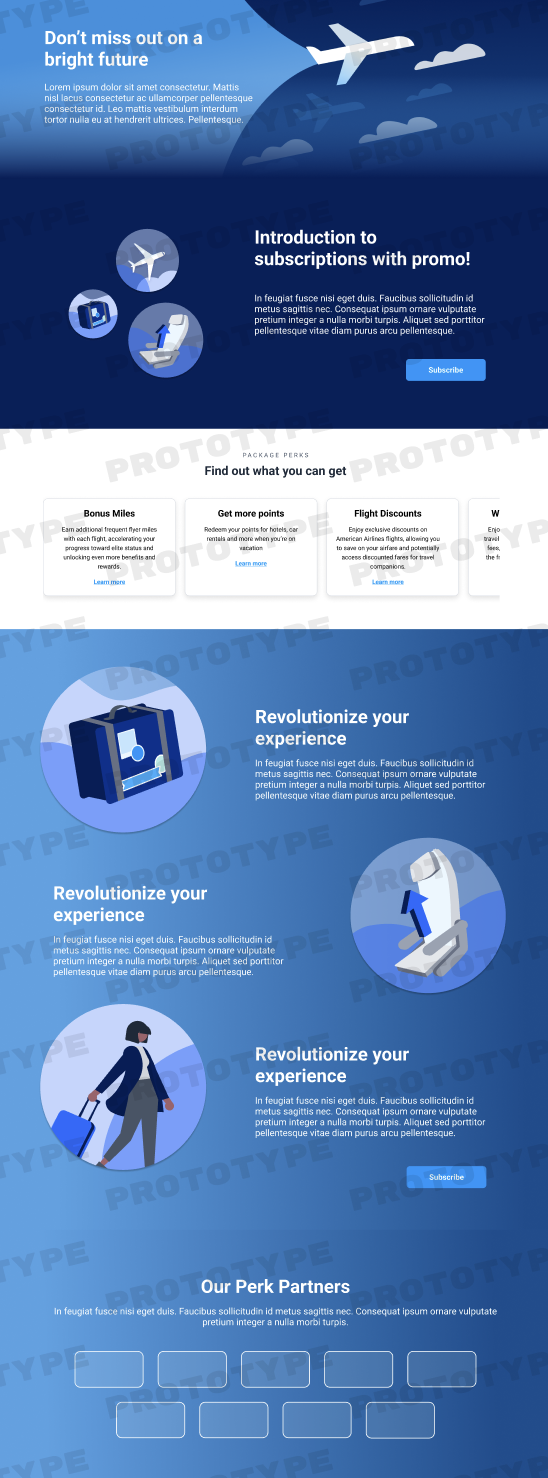
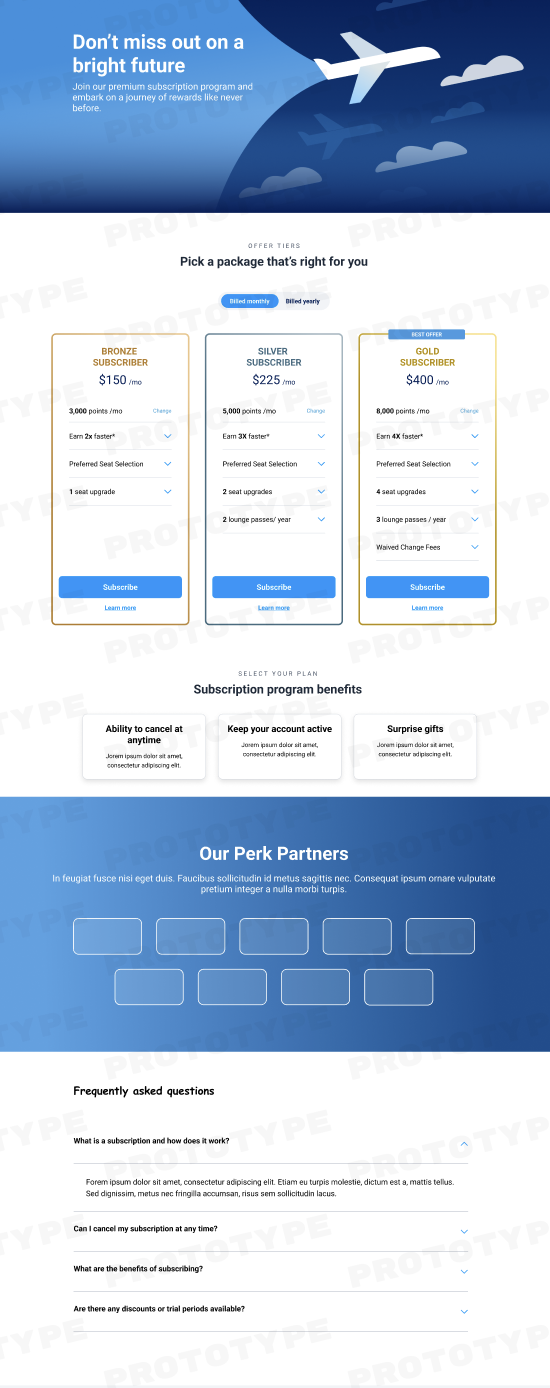
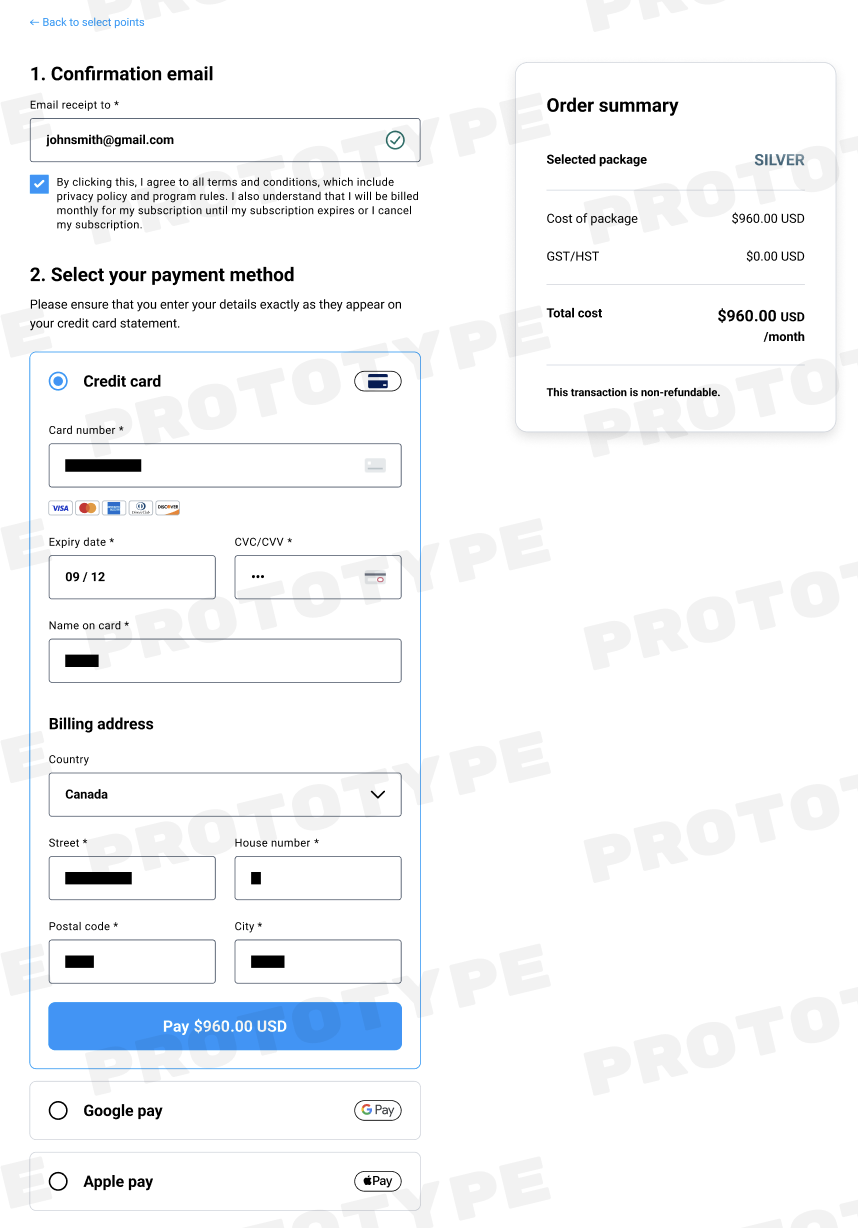
The design team created and tested early mockups, focusing on clarity of offerings and transparent accrual mechanics. Iterative revisions refined these solutions into a simplified, scalable interface that addressed usability issues.
Designers were embedded into engineering, risk, and delivery teams to ensure specifications translated into execution. This embedding reduced late-stage rework, streamlined communication, and ensured compliance. By situating design within technical discussions, the project avoided typical bottlenecks and gained operational efficiency.
revenue growth
usability & clarity
accessibility
revenue growth
usability & clarity
accessibility